Sewer line problem in Denver warning signs may include recurring drain clogs, sewage odors, unusual sounds, wastewater backups, and soggy areas in your yard. Recognizing these symptoms early can help you address a blockage or damaged pipe before it causes extensive damage to your plumbing system or home.
Your main sewer line carries wastewater from every drain in your house to the municipal sewer system. When that line becomes clogged, cracked, or damaged, the effects may appear throughout your home instead of at one isolated fixture.
What Are the Most Common Signs of a Sewer Line Problem?
A sewer line problem does not always begin with a dramatic backup. Homeowners often notice smaller changes first, particularly in plumbing fixtures located on the lowest level of the house.
Watch for these common warning signs:
- Several slow drains: Multiple sinks, tubs, or showers draining slowly may point to a blockage in the main sewer line.
- Recurring clogs: A drain that keeps clogging after being cleared could indicate a deeper obstruction.
- Gurgling sounds: Bubbling or gurgling from toilets and drains can occur when trapped air is forced through wastewater.
- Sewage odors: Persistent sewer smells inside or outside the home may signal a cracked pipe, dry drain trap, or backup.
- Water backing up: Wastewater rising through a floor drain, bathtub, or shower is a serious warning sign.
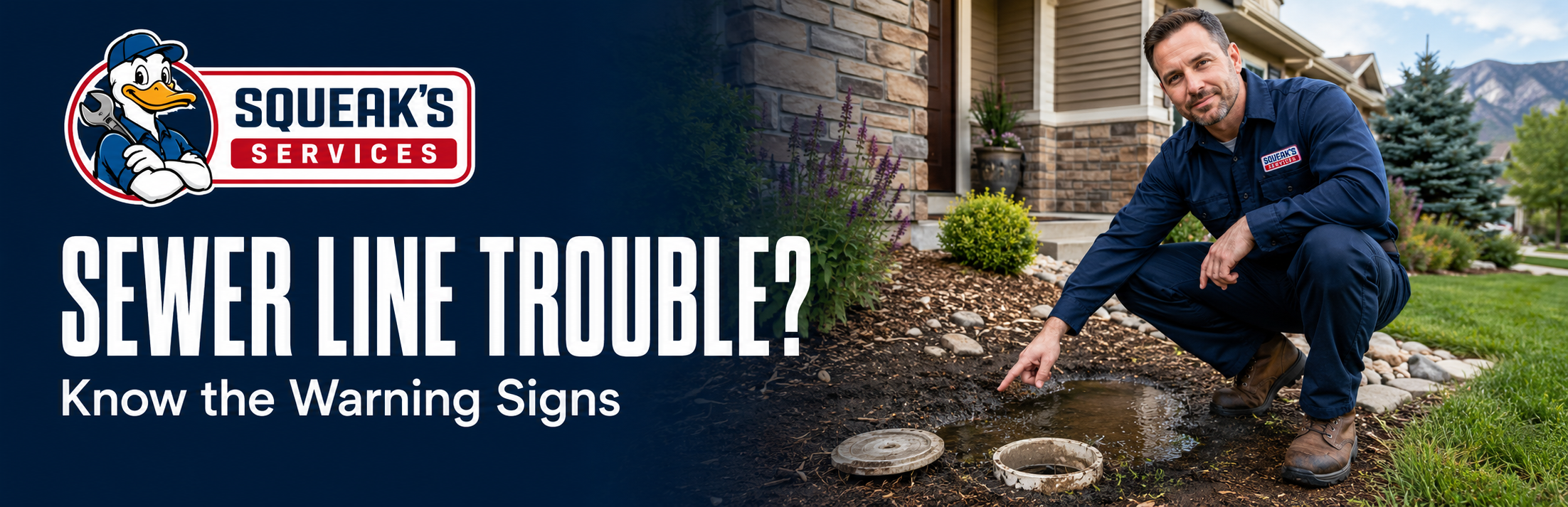
- Changes in the yard: Damp soil, unusually green grass, or sunken areas may develop above a leaking sewer pipe.
One slow drain usually indicates a local clog. Several affected fixtures are more likely to point to a main sewer line problem. A professional plumbing inspection can determine where the restriction is located and what should be done about it.
Why Are Multiple Slow Drains a Concern?
Every drain in your home eventually connects to the main sewer line. If only one bathroom sink is slow, the obstruction may be close to that fixture. When a toilet, shower, and nearby sink all begin draining poorly, the restriction may be farther down the plumbing system.
Homeowners should pay particular attention to the lowest drains in the house. A basement floor drain, first-floor shower, or bathtub may be the first place wastewater appears when the sewer line cannot carry it away.
Professional drain cleaning services can address stubborn buildup and help determine whether the issue is confined to a branch drain or affecting the main sewer line.
What Do Gurgling Toilets and Drains Mean?
A drain should allow wastewater and air to move through the plumbing system without making unusual noises. Gurgling can occur when a blockage interrupts that airflow. The trapped air then escapes through a toilet bowl or another nearby drain.
You might notice:
- A toilet bubbling when the washing machine drains
- A sink gurgling after you flush the toilet
- Water moving in a toilet bowl while a shower is running
- Air bubbles coming through a bathtub or floor drain
An occasional sound does not confirm that the sewer line is damaged. Frequent gurgling that affects more than one fixture deserves professional attention, especially when it appears alongside slow drainage or unpleasant odors.
Why Does Sewage Keep Backing Up?
A sewage backup usually means wastewater has encountered a blockage and is moving toward the lowest available opening. This can expose your home to contaminated water and damage flooring, walls, furniture, and personal belongings.
If wastewater begins backing up, take these precautions:
- Stop using sinks, toilets, showers, and water-using appliances
- Keep children and pets away from the affected area
- Avoid direct contact with wastewater
- Call a plumbing professional as soon as possible
Do not continue flushing toilets or running water to test the drain. Adding more wastewater can make the backup worse. Even if the water eventually recedes, the underlying obstruction may still be present.
What Causes Sewer Line Problems in Denver?
Denver sewer lines can develop problems for several reasons. Pipe age, ground movement, invasive roots, grease, and accumulated debris can all restrict wastewater flow or weaken the line.
Common causes include:
- Tree root intrusion: Roots can enter small pipe joints and cracks while searching for moisture.
- Grease buildup: Cooking fats may cool inside the pipe and collect food particles or other debris.
- Damaged pipes: Older lines may crack, corrode, separate, or partially collapse.
- Foreign materials: Wipes, hygiene products, paper towels, and other non-flushable items can create blockages.
- Pipe bellies: A sagging section of pipe can hold wastewater and solids instead of allowing them to flow freely.
- Seasonal ground movement: Shifting or freezing soil can place additional pressure on buried sewer pipes.
The correct solution depends on the cause. A pipe filled with grease and debris requires a different approach than a collapsed or severely offset sewer line.
Can Hydro-Jetting Clear a Main Sewer Line?
Hydro-jetting uses highly pressurized water to remove material from the inside walls of a drain or sewer pipe. It may be recommended for heavy grease, sludge, mineral deposits, and other buildup that a basic drain-clearing method cannot fully remove.
Professional hydro-jetting in Denver can provide a more complete cleaning when the pipe is structurally sound. It may also help reduce the chance that residue left inside the line will quickly collect new debris.
Hydro-jetting is not appropriate for every sewer problem. A damaged, fragile, or collapsed pipe may need repair instead of cleaning. The plumbing system should be evaluated before high-pressure cleaning is performed.
Should You Use Chemical Drain Cleaner?
Store-bought chemical cleaners may appear to help with a small clog, but they rarely solve a blockage located deep inside a main sewer line. Repeated use can also expose plumbing materials to harsh chemicals without removing the source of the problem.
Avoid relying on chemical products when:
- More than one drain is slow
- A clog returns soon after treatment
- Wastewater is backing up into another fixture
- You hear gurgling throughout the home
- Sewage odors are becoming stronger
- The age or condition of the pipes is unknown
Professional diagnosis is safer than repeatedly treating symptoms. A plumber can locate the obstruction, assess the condition of the line, and recommend an appropriate cleaning or repair method.
When Should You Call a Denver Plumber?
Call a plumber when sewer warning signs affect multiple fixtures, continue to return, or create a risk of wastewater entering your home. Prompt attention is especially important if sewage is already backing up or you suspect that a buried pipe is leaking.
Arrange an inspection if you notice:
- Repeated clogs in the same area
- Several slow drains at once
- Persistent sewer odors indoors or outdoors
- Gurgling from toilets, showers, or sinks
- Wastewater coming through a low drain
- Wet, sunken, or unusually green patches in the yard
Early diagnosis may prevent a partial blockage from becoming a complete sewer backup. It also gives you time to understand the available options before the situation becomes an emergency.
Get Help With a Sewer Line Problem in Denver
If you are dealing with recurring clogs, slow drains, sewer odors, or wastewater backups, Squeak’s Services can evaluate the plumbing system and identify the source of the trouble. The right service may involve professional drain cleaning, hydro-jetting, or further examination of the sewer line.
Call Squeak’s Services at 303-280-5765 or contact the team online to schedule service. You can also visit the Squeak’s Services Google Maps profile for location and customer information.