
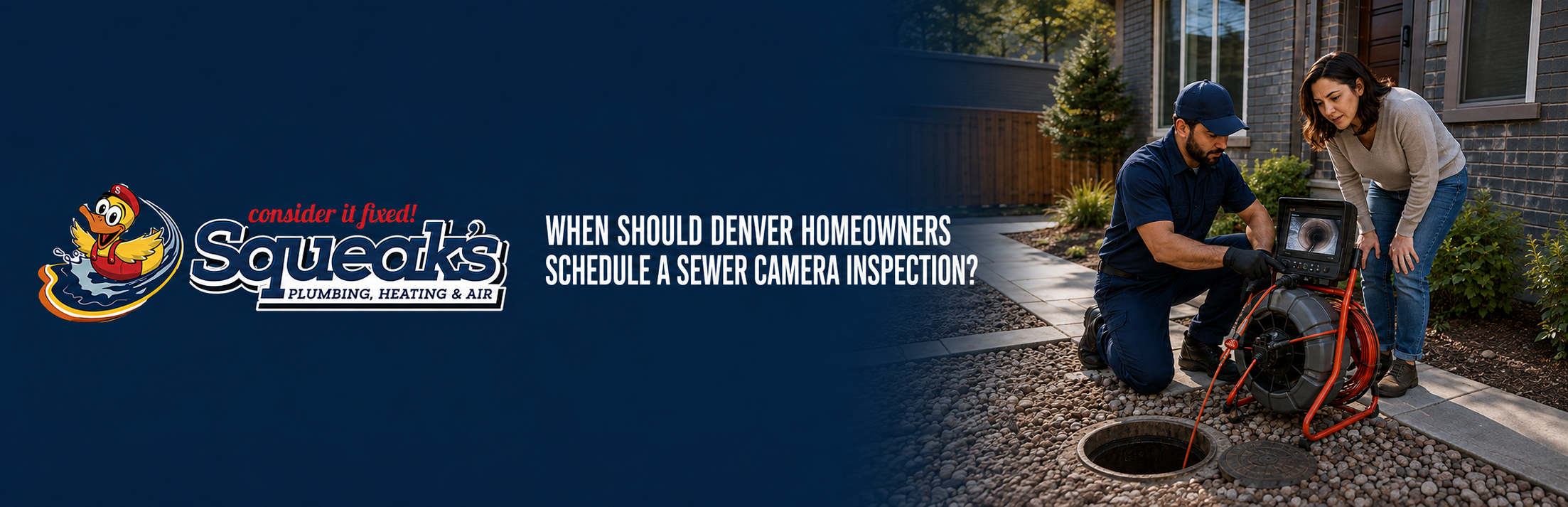
Sewer camera inspection service gives Denver homeowners a clear view of problems hidden inside a sewer line. It is especially useful when drains keep clogging, sewage backs up, unexplained odors develop, or you need reliable information before purchasing or repairing a home.
A sewer line can develop trouble long before the cause becomes visible. Because the pipe is buried, guessing at the problem may lead to temporary fixes, unnecessary digging, or repeated service calls.
A camera inspection removes much of that uncertainty. A plumber can examine the inside of the line and determine whether the problem involves buildup, roots, damaged pipe, or another obstruction.
What Is a Sewer Camera Inspection?
During a sewer camera inspection, a plumbing technician feeds a flexible cable with a waterproof camera into the sewer line. The camera transmits video from inside the pipe, allowing the technician to examine areas that cannot otherwise be seen.
The inspection may reveal:
- Grease, sludge, or other material collecting inside the line
- Tree roots entering through joints, cracks, or damaged sections
- Crushed, cracked, separated, or corroded sewer pipes
- Low spots where wastewater and debris repeatedly collect
- Foreign objects or heavy obstructions restricting flow
- Signs that a previous repair has shifted or deteriorated
The camera identifies what is happening and where it is happening. That information helps the plumber recommend a solution based on evidence instead of symptoms alone.
Schedule an Inspection When Drains Keep Clogging
An occasional sink or shower clog does not always indicate a sewer-line problem. A blockage limited to one fixture may be caused by hair, soap residue, food waste, or another nearby obstruction.
Repeated clogs are different. If the same drain slows down again shortly after being cleared, material may remain inside the pipe. The drain could also have a structural problem that ordinary cleaning cannot correct.
A camera inspection becomes particularly helpful when:
- A clog returns within weeks or months of service
- Several fixtures begin draining slowly at the same time
- Plunging or snaking restores flow only temporarily
- The lowest drain in the house backs up first
After the source is identified, professional drain cleaning services can be selected to match the type and location of the obstruction.
Arrange an Inspection After a Sewer Backup
A sewer backup is one of the clearest reasons to inspect the main line. Wastewater coming through a floor drain, bathtub, shower, or toilet may mean that the home’s sewer line cannot carry water away properly.
Clearing the immediate blockage may restore drainage, but it does not always explain why the backup occurred. If roots, pipe damage, or extensive buildup remain, the problem can return.
A post-backup camera inspection can help distinguish a one-time blockage from an ongoing sewer defect. It also gives the homeowner useful information when deciding whether cleaning, repair, or replacement is appropriate.
Pay Attention When Several Drains Act Up Together
Multiple slow or gurgling drains often point to a problem deeper in the plumbing system. For example, a toilet may bubble when the washing machine drains, or water may rise in a bathtub when another fixture is used.
Possible warning signs include:
- Gurgling sounds from toilets or drains
- Water moving between nearby plumbing fixtures
- Slow drainage throughout one level of the home
- Backups near a basement or ground-floor drain
- Sewer odors coming from more than one room
- Toilet water levels changing without an obvious cause
These symptoms can occur when air and wastewater are struggling to move through a restricted line. A camera inspection can show whether the restriction is caused by accumulated debris or damage to the pipe itself.
Use a Camera Before Hydro Jetting an Older Sewer Line
Hydro jetting uses controlled streams of high-pressure water to remove grease, scale, sludge, and other stubborn buildup from pipe walls. It can provide a more thorough cleaning than methods that only create an opening through the center of a blockage.
Before recommending hydro jetting in Denver, a plumber may inspect the line to evaluate its condition. This is particularly important when dealing with an older pipe, an unknown sewer system, or signs of structural damage.
The inspection helps answer important questions:
- Is buildup the main cause of the drainage problem?
- Can the existing pipe safely receive the proposed cleaning?
- Are roots entering through a crack or separated joint?
- Is a damaged section likely to require repair instead?
Once cleaning is complete, another camera pass may be useful in some situations. The clearer view can reveal defects that were previously hidden behind residue or standing water.
Consider an Inspection Before Buying a Denver Home
A standard home inspection may evaluate visible plumbing fixtures, but the buried sewer line requires specialized equipment. Scheduling a sewer scope before purchasing a home can uncover problems that might otherwise remain hidden until after closing.
This step may be worth considering when:
- The home or sewer line is several decades old
- Mature trees grow near the path of the sewer
- The seller reports a history of backups or drain repairs
- The property has been vacant for an extended period
- There are unexplained patches of wet or unusually green ground
- You plan renovations that will increase plumbing use
A camera inspection cannot predict every future plumbing issue. It can, however, document the accessible condition of the sewer line at the time of the inspection and help buyers make a better-informed decision.
Inspect the Line Before a Major Sewer Repair
Sewer repair can involve a significant amount of work, so the location and extent of the damage should be understood first. Camera footage can help determine whether the problem is concentrated in one area or appears throughout the line.
A technician may also use locating equipment with the camera to estimate where a defect sits beneath the property. This information can reduce exploratory work and help define the likely repair area.
In some cases, a section of pipe may be repairable. In others, widespread deterioration may make a broader solution more practical. The purpose of the inspection is to support an accurate recommendation, not to assume that every sewer problem requires replacement.
Denver Conditions That Can Affect Sewer Lines
Denver homes vary widely in age, pipe material, landscaping, and previous plumbing work. Older neighborhoods may have sewer lines that have been serving homes for many decades, while remodeled properties may contain a combination of old and newer materials.
Local sewer problems may be influenced by:
- Mature trees with roots seeking moisture near pipe joints
- Aging pipe materials that have cracked or deteriorated
- Soil movement that changes the alignment of buried piping
- Grease, wipes, and household debris collecting over time
Cold weather may also place additional stress on already vulnerable plumbing. A camera inspection allows the plumber to evaluate the actual line rather than make assumptions based solely on the home’s age or neighborhood.
What a Sewer Camera Cannot Always Show
Sewer cameras are valuable diagnostic tools, but they have limits. Heavy buildup or murky standing water may obstruct the view. The camera also shows the inside surface of the pipe, not the surrounding soil or every condition outside the line.
An inspection may need to be combined with other diagnostic work when:
- The camera cannot pass a complete blockage
- The line must be cleaned before the pipe walls are visible
- A leak is suspected but no obvious opening appears on camera
- The sewer route or access point cannot be confirmed
A qualified technician should explain what the footage shows, what remains uncertain, and whether another step is needed. A clear diagnosis may involve both inspection and cleaning rather than either service by itself.
Should You Schedule Routine Sewer Camera Inspections?
Most homeowners do not need a sewer camera inspection on an arbitrary annual schedule. It is generally more useful when there are warning signs, a history of trouble, or a specific decision that requires more information.
Preventive inspections may make sense for homes with recurring root intrusion, aging sewer materials, or previous structural repairs. The appropriate interval depends on what was found during earlier service and how quickly the issue tends to return.
If your sewer line has no symptoms and no known history of problems, ask a plumber whether inspection would provide useful information. Avoid treating it as a substitute for every form of routine drain care.
Schedule a Denver Sewer Camera Inspection
Recurring drain trouble deserves more than another temporary fix. Squeak’s Plumbing, Heating & Air can inspect your sewer line, explain the findings, and recommend the next step based on the pipe’s actual condition.
Call (303) 280-5765 or schedule plumbing service online. You can also view the Google Maps profile for Squeak’s Plumbing, Heating & Air to learn more about the local team serving Denver homeowners.